EDWARD VILLELLA / FOUNDING ARTISTIC DIRECTOR

Getting Ready for Ballroom – Part 4

Your last chance to see The Neighborhood Ballroom before the dancers get back into tutus and pointe shoes is this weekend at Kravis Center. You’ve already seen the costume bibles, the costumes for the first two acts of the ballet, and “THE FOX-TROT” costumes. Now, in the final installment of our series, Haydee shows us the hot costumes for “THE MAMBO” and gives us some background on how she found them!

From the Studio to The Neighborhood Ballroom

Post by Principal Dancer Deanna Seay

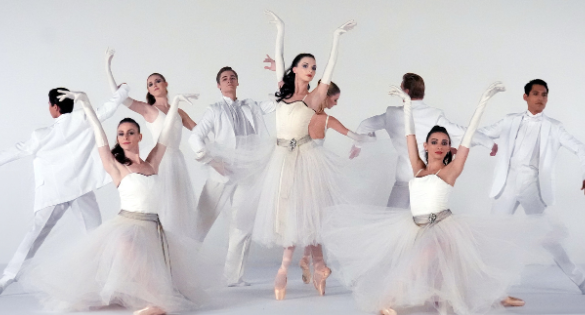
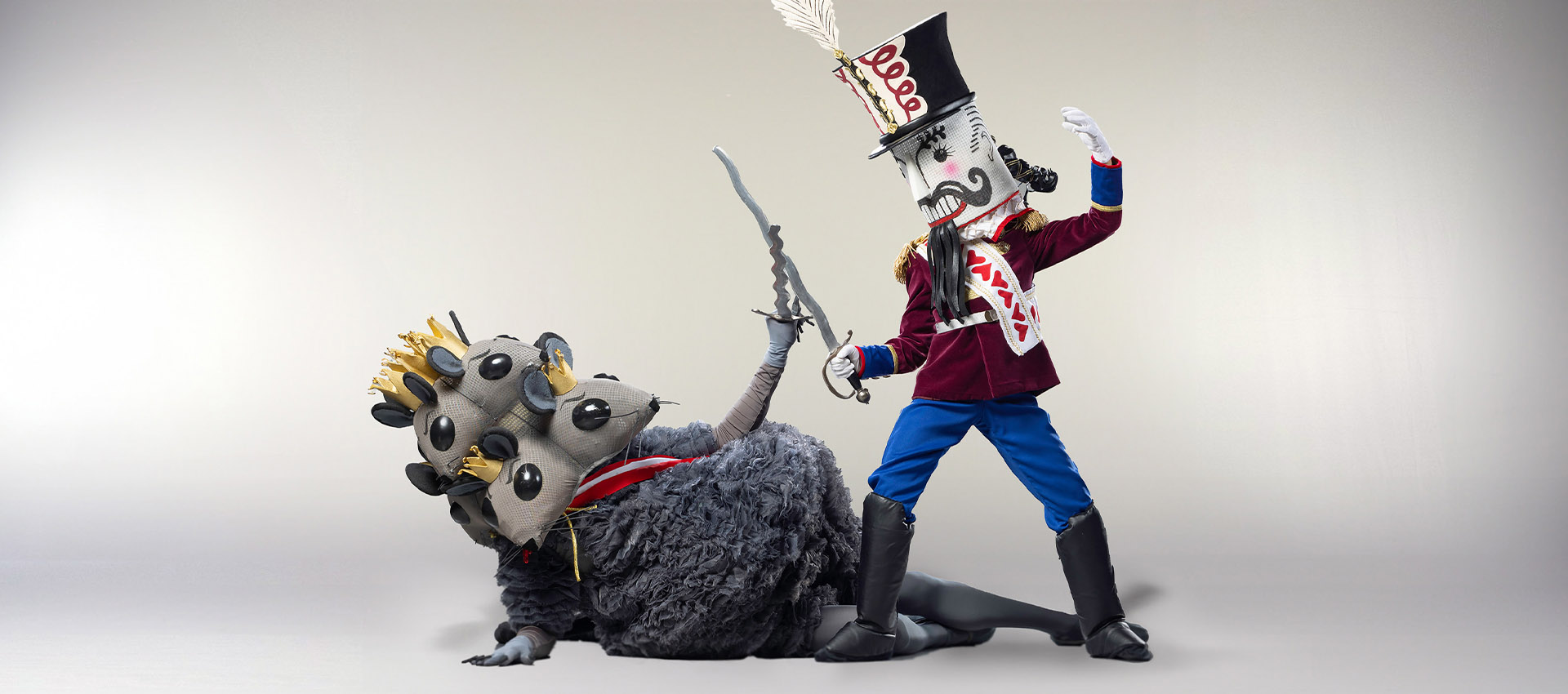
Ah…full-length story ballets. Often beautiful, always entertaining, audiences love to watch a story unfold onstage during an evening. Someone is always dancing, whether the corps de ballet or the principals, and the corresponding narrative seems to help the audience understand the dancing language. One of the six full-length works in our repertoire, The Neighborhood Ballroom is unique in its focus on several different time periods (the Belle Epoque, Jazz Age, 1940s war years, and the 1950s) and the related dance rage of each era). Edward Villella’s tribute to these different eras is a product of his extensive dance knowledge, and it is his vision that is fully realized with this production. His sense of detail brings to life four different acts dance trends, spanning from 1912 to the 50s.

Any full-length narrative work requires a lot of preparation, and The Neighborhood Ballroom is no exception. There are many details that must be polished to allow the story to emerge. Working these things out takes time; long rehearsals with intense focus are required to absorb these details, and while the process is ultimately rewarding, it is also exhausting. Each era must be recreated so as to be able to distinguish one from the other; the restrained behavior during the days of Absinthe and the Boston Waltz differs from the crazy experimentation that occurred during the Jazz era and the Quick-Step. One of the wonderful things about The Neighborhood Ballroom (or just “Ballroom,” as we call it) is that these nuances are achieved through the choreography, with the mood of each period expertly conveyed through its corresponding style.

It would not be possible to perform this work if the dancers in it did not love to dance so much. To begin with, there is so much dancing involved that several dancers are required to appear in all four acts. After many hours of rehearsals learning very detailed, style-specific choreography, watching the company members transform themselves from one period to another is very similar to watching a chameleon change colors – they fit themselves into the style instantly and effortlessly. The principals in each act work out the details of their individual characters, adding further dimension to the wonderfully-inventive pas de deuxs that occur throughout the evening. The technical side of this production is also very complicated; the level of excitement in watching the production crew accomplish the many special effects backstage nearly rivals the excitement of watching the dancers onstage. It never ceases to amaze me how much goes into the ambiance onstage; those beautiful serene moments that people see are the product of much more than meets the eye.

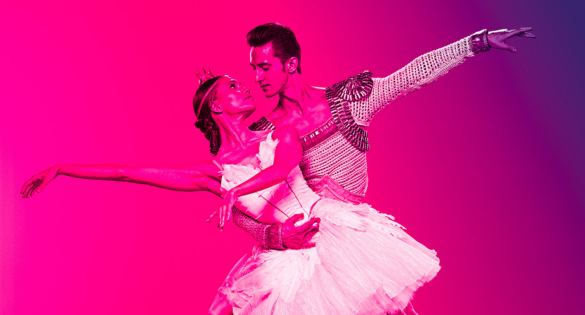
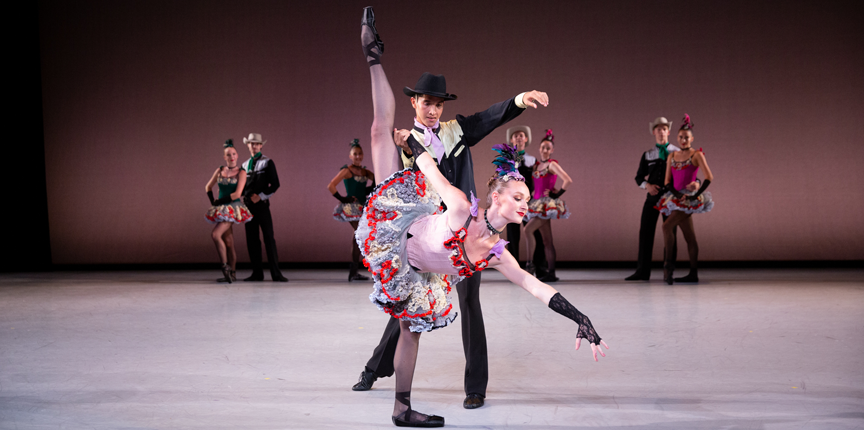
Deanna Seay in The Neighborhood Ballroom. Photo © Joe Gato.

Getting Ready for Ballroom – Part 3

After seeing the costume bibles and costumes for the first two acts of The Neighborhood Ballroom, we are sure you’ve noticed that the attire changes with each era. In this installment of the series, Haydee shows us the costumes for “THE FOX-TROT” and some of the accessories the women wear. It is incredible the amount of details that go into all the dresses!

Don’t miss The Neighborhood Ballroom this weekend at Broward Center for the Performing Arts.

Crista Villella – Ballroom Ballet Mistress

Since the summer she’s been spotted watching videos of The Neighborhood Ballroom and taking notes. Finally the time came when Crista Villella, Ballet Mistress, began rehearsing the Company for the ballet which will be performed as Program III. Originally choreographed by her father, Edward Villella, Ballroom became one of her projects for this season. We caught up with Crista at Adrienne Arsht Center to talk about her experience with Ballroom.

Miami City Ballet will present The Neighborhood Ballroom this weekend (February 5-7) at Adrienne Arsht Center, on February 12-14 at Broward Center, and on February 19-21 at Kravis Center.

Getting Ready for Ballroom – Part 2

Now that you’ve seen the costume bibles, take a look at the costumes the dancers will be wearing on stage during The Neighborhood Ballroom! Haydee actually went to the vintage shops of Miami and found amazing attire for the ballet. But not all the pieces were purchased – some were made by the wardrobe department. See if you can tell the difference.

In this installment of the costume series, Haydee shows us what the dancers will be wearing in the first two acts of the ballet.

The Poet returns to the Ballroom

Yann Trividic is back to dance the principal role of The Poet in Edward Villella’s The Neighborhood Ballroom. We caught up with the former principal dancer earlier in the season to see how it felt to be back. But now it’s almost show time! In a couple days, Yann will take the stage to reprise the role that was created on him. We sat down with Yann to talk about taking the stage again.

Don’t miss your chance to see Yann dance this weekend (February 5-7) at Adrienne Arsht Center, at Broward Center on February 12-14, and at Kravis Center on February 19-21.

Getting Ready for Ballroom

This weekend, the dancers will hang up their tutus and tights and suit up in dresses and jackets — The Neighborhood Ballroom opens Friday night at Adrienne Arsht Center! Haydee Morales, MCB Costume Designer and Director of Wardrobe, designed the costumes for this full evening ballet. It took lots of hard work and long hours, but with the help of her team, Haydee created an entire wardrobe for this piece.

Here’s a sneak peek at what went into designing the costumes for The Neighborhood Ballroom.

Stay tuned for more of our costume series.

Enraptured in two major Balanchine roles

Post by Michael Sean Breeden

When I was a young dancer at the School of American Ballet, I became enraptured with the world of Balanchine. I had always known that it was music that made me want to dance, but the steps in his ballets seemed to pour forth directly from the music in ways that sparked my imagination like never before. Each new ballet I saw or learned revealed different facets of his genius to me. I knew that I wanted to make dancing these ballets my life.

The majority of the repertoire we dance at Miami City Ballet is George Balanchine’s work and being in this Company has given me many wonderful opportunities to dance corps and demi-soloist roles in his ballets. In ballets like “Diamonds” and Square Dance there is nothing like sharing the greatness of the stage, music and choreography with your peers who, in this Company, we are lucky to say are also our closest friends. While I have relished these opportunities, I was very excited to have the chance to perform two major roles in ballets by Balanchine done in Program II: Divertimento No. 15 and Valse Fantaisie (1953).

Divertimento No. 15 is a Balanchine classic danced by many companies around the world, and the only major work he ever made to music by Mozart. Balanchine said it was the greatest divertimento ever written and he paid homage to Mozart by accompanying it with some of his finest choreography. The ballet is a classical dancer’s dream, with each step perfectly blending Balanchine’s own choreographic innovations with tributes to past masterwork by Petipa. After navigating through typical opening weekend jitters, I find myself presently comfortable enough to find ways to make each show unique. Trying to fill the music differently or find new moments to relate to your partners onstage is a wonderful way to make the ballet come alive for you and the audience. Getting to perform a lead role in a classic like “Divert”, as the dancers call the ballet, is one of the most rewarding onstage experiences I have had yet.

While “Divert” is a revered classic, the 1953 version of Valse Fantaisie we perform is a gem that is little seen and would be all but extinct if it were not for Miami City Ballet. Having danced the 1967 version of Valse Fantaisie as a member of Boston Ballet II, it has been a particularly interesting experience for me to perform the earlier version. While both have many merits, they are similar only in sweep and lightness; little links the two choreographically. Being able to compare two very different perspectives by George Balanchine on a single piece of music has proven fascinating.

Both ballets have provided me with great challenges and pleasures. “Divert” is a masterful exercise in classical simplicity and elegance, while Valse Fantaisie (1953) challenges its dancer’s stamina and requires them to devour space. While it is bittersweet to be nearing my final performances of these ballets, I have thoroughly enjoyed the experience and hope that one day I will find myself performing in them once more.

Michael Sean Breeden and Tricia Albertson in Divertimento No. 15. Choreography by George Balanchine. Copyright The George Balanchine Trust. Photo © Sayre Berman of the Miami New Times.

Don’t miss your final chance to see Michael in Program II this weekend.

Miami City Ballet WOWS The New York Times reviewer at Program II

“People leapt to their feet at each performance…after every work there were cheers from all parts of the large auditorium…the company, dancing five first-rate works, was looking better than ever…The virtues of unforced energy and warm enthusiasm are beautifully apparent here…I was struck by how acutely and eagerly responsive to fine details of style these (MCB) dancers are.”

Read Alastair Macaulay’s full review — In Florida, Fresh Talent Takes to the Stage, Along With a Veteran Team

Mary Carmen Catoya and Rolando Sarabia in "The Golden Section". Photo by Alex Dufaur

Sara Esty leaps into “The Golden Section”

This past weekend, Sara Esty filled in for Principal Dancer Jeanette Delgado during Program II at Adrienne Arsht Center. After dancing the corps part in Divertimento No. 15 and one of the principal roles in Valse Fantaisie (1953), Sara had to change quickly into her gold costume and leap into “The Golden Section”.

We talked to Sara about this busy, yet exciting, weekend.